
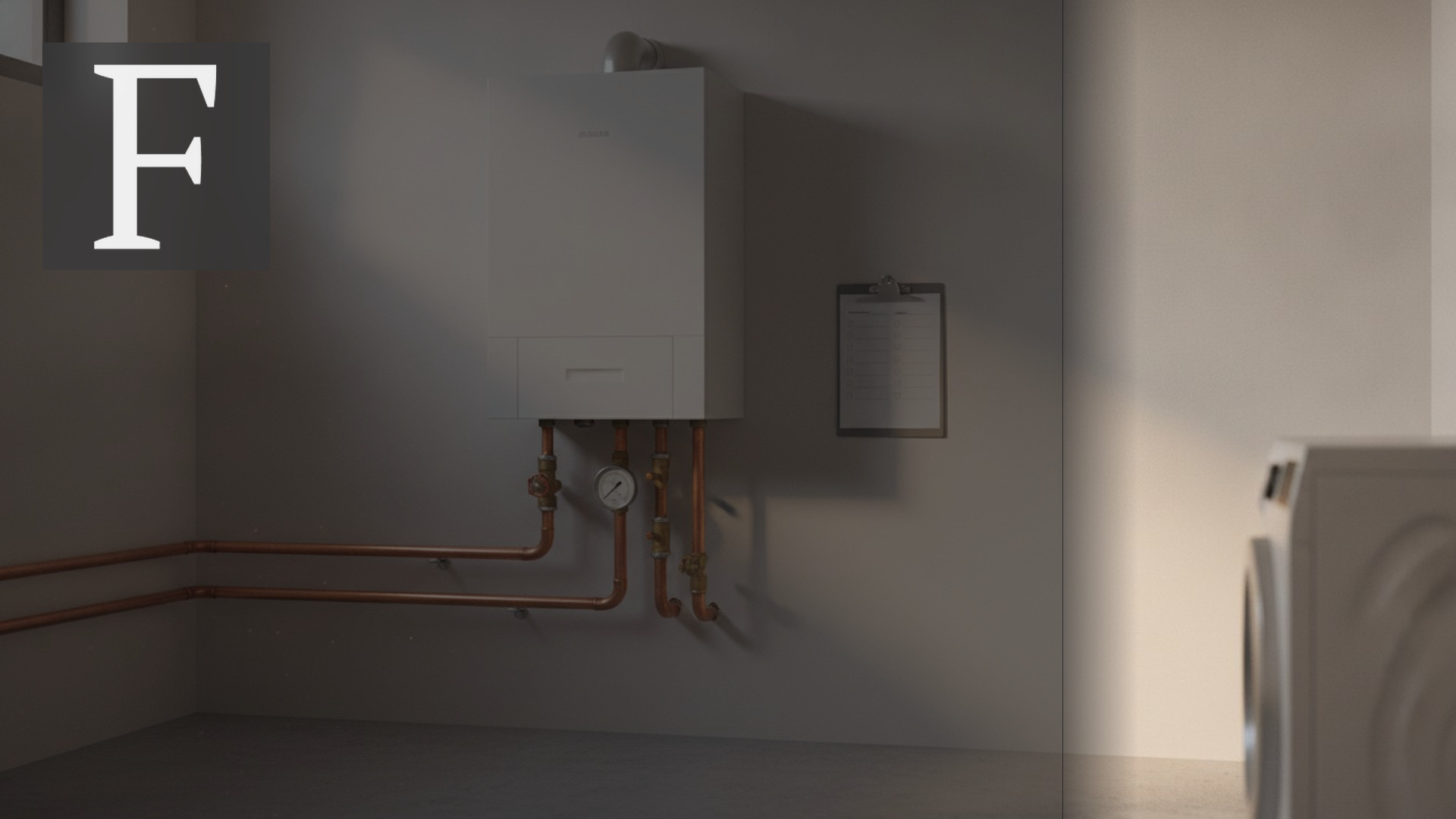
Germany’s new heating law, the Building Modernisation Act (Gebäudemodernisierungsgesetz, GModG), has been in force since 29 July 2026; it is the amended and renamed Building Energy Act (Gebäudeenergiegesetz, GEG); the sections on the heating inspection (Section 60b) and hydraulic balancing (Section 60c) keep the same numbers as in the GEG. The former 65 % rule, under which newly installed heating systems had to run on at least 65 % renewable energy, and the obligation to replace old boilers after 30 years have been abolished; Sections 71 to 73 are now listed in the Act only as “repealed”.[1] Since then, two points matter most for owners: the size of the building, which determines whether a heating inspection is mandatory, and the installation of a new gas or oil heating system. The heating inspection itself is not new; it has applied since 1 October 2024 and remains in place under the new Act.[1] How much the debate about the Building Energy Act and the EU renovation plans unsettled owners in 2023 is described in our article on forced renovation. Three typical cases and a practical example show what applies today (legal position as of 23.10.2026).
Case 1: Heating inspection in an apartment building with six flats, one of them owner-occupied
For buildings with at least six flats or other self-contained units, Section 60b GModG requires a one-off heating inspection and heating optimisation (Heizungsprüfung und Heizungsoptimierung) if the heating system uses water as the heat transfer medium and is not a heat pump. The Act refers to the number of flats; according to its wording, the fact that the owner lives in one of them changes nothing.[2]
- Deadline: Heating systems installed or set up before 1 October 2009 must have been inspected by 30 September 2027. More recent systems are due within one year after 15 years have passed since installation or set-up.
- What is inspected: whether the adjustable operating parameters of the heat generator are set for energy efficiency, whether an efficient heating circulation pump is used, to what extent pipes and fittings should be insulated, and which measures can lower the flow temperature.
- Typical optimisations: adjusting the heating curve or lowering the flow temperature, setting night-time setback or summer shutdown, setting circulation and the circulation pump correctly, lowering the hot water temperature and the heating limit temperature, in each case insofar as the building fabric and health protection allow.
- Who inspects: a qualified person (Section 60b(3) in conjunction with Section 60a(4)), in particular chimney sweeps, plumbers and heating engineers, stove and air heating installers, or an energy consultant listed on the Energy Efficiency Expert List (Energieeffizienz-Expertenliste). The inspection should be combined with work that is due anyway, such as servicing or the chimney sweep’s inspection of the combustion installation (Feuerstättenschau); it can also be evidenced as part of a hydraulic balancing. Heating inspection and hydraulic balancing are nevertheless two separate obligations: Section 60c GModG requires hydraulic balancing in buildings with six or more flats after a new heating system has been installed (see Case 3).
- Afterwards: The result and the need for optimisation are recorded in writing. If the inspection shows a need for adjustment of the heat generator’s settings, the optimisations must be carried out within one year of the inspection and also recorded in writing. Tenants can demand that the result and the evidence be presented to them without delay. The owner keeps the documents for at least ten years.[3]
- Exemptions: systems with standardised building automation under Section 56 GModG and heat pumps, which are subject to the operational inspection under Section 60a anyway. Provided the overall effect is equivalent, also systems under an energy performance contract (contracting) and systems operated by a utility or network operator and monitored for efficiency at system level.
- Fine: Anyone who intentionally or recklessly fails to carry out the inspection or a necessary optimisation, or does not do so in time, commits an administrative offence; the fine can be up to €5,000.[4]
What changes from 1 January 2027: The amending Act of 23 July 2026 amends Section 60b and recasts Section 60a with effect from 2027.[5] The new version applies to inspections from 1 January 2027. The amending Act contains no transitional rule for inspections already carried out in 2026. The inspection will then generally cover whether the heating system is operated energy-efficiently with regard to its essential settings, components and operating parameters; the optimisation includes in particular adjustments to the controls, to temperature and operating management and to further settings, as well as pointers to further savings measures. The points listed above therefore remain typical areas of inspection and optimisation. Qualified persons will then be in particular those with a relevant craft or technical professional qualification in heating, refrigeration, air heating or electrical engineering; chimney sweeps and energy consultants are no longer named expressly; the relevant professional qualification is decisive. From 2027, the one-year period applies to every need for optimisation identified in the inspection, not only to the settings of the heat generator.
Practical tip: Have the inspection carried out by your heating engineer at the next service. The engineer can implement the optimisations right away; chimney sweeps may currently carry out the inspection, but pump replacement and insulation are usually done by the heating firm anyway. The costs of the heating inspection depend on the size of the system and the findings and are best clarified through a quote. That owners can also be liable for damage to the neighbouring house caused by the tradespeople they commission is shown in the article House, apartment and land owners are liable for damage caused by commissioned craftsmen.
May landlords pass the costs of the heating inspection on to their tenants?
There is no express rule: Section 60b GModG says nothing about the costs, and the amending Act of 23 July 2026 did not amend the Operating Costs Ordinance (Betriebskostenverordnung, BetrKV) or the Heating Costs Ordinance (Heizkostenverordnung, HeizkostenV).[6][7] The general rules apply: the landlord may only pass on operating costs that are agreed in the tenancy agreement and arise on an ongoing basis (Section 556(1) BGB, German Civil Code). Heating costs include the costs of the regular inspection of the system’s operational readiness and operational safety, including adjustment by a specialist (Section 2 no. 4(a) BetrKV, Section 7(2) HeizkostenV).[8] According to the Federal Court of Justice (BGH), costs that recur only every four years or every five to seven years are also ongoing;[9][10] a one-off measure prompted by a specific occasion is not sufficient.[10] However, the heating inspection is required only once per system; the sentence applicable until the end of 2026 on when a repeat inspection is unnecessary (Section 60b(6) old version) no longer applies from 2027.[2][7]
Classification: It is therefore doubtful whether the inspection costs can be passed on as ongoing operating costs. A further argument against passing them on is that the inspection under Section 60b serves energy efficiency, not operational readiness or safety; in favour of it, the optimisation of the settings can be understood as “adjustment by a specialist” and benefits tenants through lower heating costs. We have not found any case law on this (as of 26.10.2026). For hydraulic balancing, which is comparable and likewise required only once, part of the legal literature considers passing the costs on through the heating costs to be readily justifiable, because it secures efficiency permanently and benefits tenants; others require recurring measures.[11] In any event, repairs cannot be passed on, such as replacing a defective pump (Section 1(2) no. 2 BetrKV).[8] If a working pump is replaced with a more economical one or pipes are insulated, a rent increase after modernisation may be considered (Sections 555b nos. 1 and 6, 559 BGB); the share attributable to maintenance must be deducted (see Case 3). The safest approach is to combine the inspection, as Section 60b(4) provides, with the servicing that is due anyway: servicing and adjustment can still be passed on, whereas an expensive extra appointment is open to objections based on the principle of economic efficiency (Section 556(3) sentence 1 BGB).[2][6][9]
Anyone who, as in this case, lets the other five flats must observe the 15 % construction withholding tax (Steuerabzug bei Bauleistungen) when commissioning pump replacement, insulation or a heating replacement; it does not apply if the client lets no more than two flats (Section 48(1) EStG, German Income Tax Act), if the firm presents a valid exemption certificate (Freistellungsbescheinigung), or if the consideration in the calendar year is not expected to exceed €15,000 (where the letting turnover is exclusively VAT-exempt) or otherwise €5,000. The limits include VAT and apply to all construction services of the same firm together.[12] For the existing heating system, carbon costs continue to be split between landlord and tenant under the tiered model of Section 5 of the Carbon Dioxide Cost Allocation Act (CO2-Kostenaufteilungsgesetz, CO2KostAufG).[13]
Case 2: Detached house with an existing gas condensing boiler
The inspection obligation under Section 60b GModG only applies from six flats upwards. It does not apply to a detached or terraced house. There is no longer any obligation to replace the existing gas condensing boiler. The current system may continue to be operated; the bio step-up (Bio-Treppe, Case 3) applies only to heating systems newly installed after 29 July 2026.[14]
What remains: the checks of the combustion installation and flue specified in the combustion installation notice (Feuerstättenbescheid) issued by the authorised district chimney sweep, as well as the chimney sweep’s inspection of the installation (Feuerstättenschau). The Act does not prescribe a fixed servicing interval. However, Section 60 GModG obliges the operator to have the components that significantly influence efficiency regularly serviced and maintained by a qualified person.[15] Servicing also keeps the system running and often preserves the manufacturer’s warranty. Anyone who has the heating curve and flow temperature lowered on this occasion saves gas: a condensing boiler only operates in condensing mode at a low return temperature.
Case 3: Replacement with a smaller gas condensing boiler after energy-efficient renovation
After a renovation (insulation, new windows), the old heating system is often oversized. If it is replaced after 29 July 2026 by a new, smaller gas heating system, the so-called bio step-up under Section 43 GModG applies to the existing building.
The bio step-up
The building owner must ensure that a minimum share of the heat supplied by the system comes from climate-friendly fuels (Section 43(1)):[14]
← Tabelle nach links wischen, um weitere Spalten zu sehen
| from | Minimum share |
|---|---|
| 1 January 2029 | 10 % |
| 1 January 2030 | 15 % |
| 1 January 2035 | 30 % |
| 1 January 2040 | 60 % |
Eligible are biomethane, bio-oil, biogenic liquefied petroleum gas and hydrogen (green, blue, orange or turquoise), including derivatives produced from them.
Who has to do this: the energy supplier?
No. The obligation lies with the building owner (Section 43(1)); if someone else operates the heating system, such as a contractor, it lies with the operator (Section 43(6)). The gas supplier is not mentioned in Section 43.
An obligation on suppliers has so far only been announced: under Section 42a GModG, the Federal Government is to present a bill for a green gas and green heating oil quota by 1 December 2026. It is to oblige those placing gas, oil and liquefied petroleum gas on the market, with the aim that the fuels placed on the market for building heat are fully climate-neutral by 2045. A specific quota and crediting against the owner’s obligation under Section 43 do not yet exist.[16]
How does “blending” work in practice?
For biomethane, on a balance-sheet basis, not physically. Section 43(2) refers to the requirements of Section 22(1) sentence 2 no. 2 GModG: the biomethane is upgraded elsewhere and fed into the natural gas grid; the quantity withdrawn by the customer in a year must correspond to the quantity fed in, evidenced by a mass balance system from production to withdrawal.[17]
For the owner, this means: as a rule, the obligation is fulfilled through a gas supply contract with the required biomethane share. Physically, the same grid gas flows through the pipe as at the neighbour’s house; the bio quantity is allocated to the owner by calculation. Technically, it therefore makes no difference whether old or new gas heating systems are connected to the same grid. Upgraded biomethane has natural gas quality; nothing changes at the appliance.
It would be different with hydrogen if it were physically blended into the grid: compatibility would then depend on the individual appliance (“H2-ready”). This is decided by the network operator, however, not by the individual owner; Section 43 does not require physical blending.
Evidence is governed by Section 96 GModG: the supplier must confirm with the bill that the requirements of Section 43(1) and (2) are met. Bills and confirmations must be kept for at least five years each during the first 15 years after commissioning and presented to the competent authority on request; the district chimney sweep checks during the inspection of the installation whether they are available.[18] What remains open, by contrast, is whether enough biomethane will be available on the market at affordable prices for all obligated parties from 2029.
The alternatives
Anyone replacing a heating system in an existing building can choose between ten compliance options under Section 42(2) GModG or combine them; some options are subject to conditions:[19]
- Heating with gas, heating oil or liquefied petroleum gas (the bio step-up then applies)
- electrically driven heat pump (including air-to-air units such as split air conditioners used for heating)
- solar thermal system
- heating with biomass or hydrogen (green, blue, orange, turquoise), including derivatives
- heat pump hybrid heating (heat pump with gas, oil, liquefied petroleum gas or biomass firing)
- solar thermal hybrid heating (solar thermal with gas, oil, liquefied petroleum gas or biomass firing)
- high-efficiency combined heat and power plant, integrated into or close to the building and integrated into the grid
- direct electric heating
- substation for connection to a heating network (district heating)
- other innovative heating solution
For the new gas heating system, Section 43 also allows the blending obligation to be met in other ways:[14]
- Solar thermal (para. 3): From 2029 to 2034, the obligation is deemed fulfilled with an aperture area of at least 0.04 m² per m² of usable floor area (residential buildings with no more than two flats) or 0.03 m² (more than two flats). Anyone wishing to credit more than 15 % needs evidence from a qualified person or a contractor’s declaration.
- Ventilation with heat recovery (para. 4): From 2029 to 2034, the obligation is deemed fulfilled if the heat recovery rate is at least 73 %, the performance figure is at least 10 and the system serves the entire building area.
- Heat pump hybrid (para. 5): The obligation is deemed fulfilled if the heat pump reaches at least 30 % of the output of the peak load generator at part-load point A under DIN EN 14825, or at least 40 % in bivalent alternative operation. If more than 30 % is to be credited, the heat pump’s share must be evidenced (depending on the building and mode of operation from 2029 or from 2040).
For solar thermal and ventilation, the wording only names the period 2029 to 2034; what applies from 2035 should be clarified before making a decision.
If the new heating system is installed in a building with at least six flats or other self-contained units, the water-based heating system must also be hydraulically balanced after installation (Section 60c GModG).[20]
Heating breakdown
If the old heating system fails unexpectedly and irreparably (Section 43(7)): for installation in 2028, the obligation only applies twelve months after installation. For installation from 1 January 2029, the obligation applicable at the time of the failure continues to apply for twelve months from installation, followed by the level then in force.[14]
Costs
Blending is likely to make fuel gradually more expensive from 2029. For context: the gas price for households rose from around 6.8 ct/kWh in 2014 to around 12.2 ct/kWh in 2025, i.e. by about 80 %; in 2026 it was above all wholesale prices that rose sharply.[21] Gas tariffs with 10 % biomethane cost an average of 12.4 ct/kWh in February 2026, compared with 9.94 ct for natural gas.[22] According to reports on a study by Fraunhofer ISI, biomethane prices of 17.6 to 24.2 ct/kWh are expected for 2030.[23] According to our own model calculation (assessment), the bio step-up makes fuel about 3 to 9 % more expensive at 10 % blending, about 10 to 26 % at 30 % and about 21 to 52 % at 60 %; for heating oil the order of magnitude is similar, but reliable long-term data for bio heating oil are lacking.[24] The sources do not show that the bio step-up makes gas significantly more expensive than oil. With gas, however, network charges come on top: they are currently around 2.3 ct/kWh; a model calculation by Fraunhofer IFAM arrives at about 22 ct/kWh by 2045, because fewer and fewer customers finance the grid.[25] The German Economic Institute (Institut der deutschen Wirtschaft) calculates for a flat in an older building with an annual consumption of 10,000 kWh that gas heating costs will rise from around €1,080 (2026) to €1,952 (2040), of which €643 is due to the bio step-up.[26] The carbon price works in the opposite direction (2026: €55 to €65 per tonne; from 2028 European emissions trading), because biogenic fuels are exempt from it; per kWh it weighs more heavily on heating oil than on gas.[27]
In an owner-occupied detached house, the owner bears the costs alone. Landlords with a gas, oil or liquefied petroleum gas heating system installed after 29 July 2026 share the gas network charges (gas only) and the carbon costs equally with the tenant from 2028 under the Carbon Dioxide Cost Allocation Act, and from 2029 also the costs of the biofuel, for a share of up to 30 % of the total fuel consumed (Section 5a(3) CO2KostAufG). A hardship rule (Section 5d CO2KostAufG) only relieves landlords who meet several statutory conditions at the same time; it is not a general privilege for small landlords. Section 5d(3) contains a special rule for the landlord of a flat in an owner-occupied building with no more than two flats.[13] Anyone who passes on the costs of the heating replacement to the rent as a modernisation may increase the monthly rent for it by no more than €0.50 per m² of living space within six years (Section 559(3a) sentence 3, Section 559e(3) BGB, German Civil Code; the general rent caps also apply). Maintenance expenses that would have been incurred anyway must be deducted (Section 559(2) BGB); in the subsidised variant, the flat-rate deduction of 15 % does not apply insofar as a heating system under Section 43 GModG is concerned (Section 559e(2) BGB). Subsidies must be deducted.[28]
Practical tip: A heating system sized smaller after the renovation matches the reduced heat demand and generally works more efficiently. Before buying, however, you should have the fuel costs over the next 15 years, including the bio step-up, calculated against the alternatives. Especially after a renovation with low flow temperatures, the hybrid or heat pump solution can be more economical. Anyone financing the replacement with a loan will find typical mistakes in the article Mistakes and pitfalls in real estate financing.
Example: gas only as a small backup, heat pump hybrid instead of biogas
A detached house was gradually converted up to 2026: hot water is supplied by a domestic hot water heat pump, and the previous gas-fired hot water supply has been switched off. New windows reduce the heat demand. Two split air conditioners with 3.5 kW each also heat in winter and take over most of the space heating; they have been running alongside the gas heating for years. The old 14 kW gas condensing boiler now only serves as a reserve for the radiators of the central heating system. It is now to be replaced by a much smaller gas heat generator with 3 to 4 kW that only supplies the radiators.
Does this owner have to buy biogas from 2029?
How are the split air conditioners classified? (Fact) Split air conditioners that heat in winter are air-to-air heat pumps, and the Act treats them as heat pumps: Section 60a(1) sentence 2 GModG expressly exempts “air-to-air heat pumps” from the operational inspection for heat pumps until the end of 2026, thereby presupposing that they are heat pumps. From 1 January 2027 this exemption no longer applies (of no practical relevance for the detached house, because Section 60a only applies from six flats upwards). The Committee on Economic Affairs and Energy justifies this by stating that air-to-air heat pumps serve to heat buildings; it is irrelevant whether the heat is transferred via a water-based system or directly via air (Bundestag printed paper 21/7009, p. 151).[29] On their own, the split units are therefore a compliance option under Section 42(2) no. 2, and together with the gas boiler a heat pump hybrid heating system under no. 5. The “other innovative heating solution” (no. 10) is not defined in the Act and does not help here: the biogas obligation is tied to the new gas boiler and only falls away via the hybrid rule of Section 43(5).
Does the mode of operation matter? Only for the threshold. If the split units and the gas boiler run at the same time, for example because the boiler only switches on in the coldest weeks and the splits keep heating, this is bivalent parallel or partially parallel operation: the heat pumps must reach 30 % of the boiler output. If the boiler only steps in when the splits are not running (pure backup, either/or), this is bivalent alternative operation: 40 % is then required. The current wording does not require joint control or priority for the heat pump; the government bill had still provided for “bivalent parallel with priority for the heat pump” (Bundestag printed paper 21/6278, p. 18), but the Act no longer contains this requirement.[30]
Legal position (fact): Under Section 43(5) GModG, the biogas obligation is deemed fulfilled if a heat pump hybrid heating system is installed and the heat pump reaches at least 30 % of the output of the peak load generator at part-load point A under DIN EN 14825, or at least 40 % in bivalent alternative operation (either heat pump or gas). According to the wording, the reference value is the output of the peak load generator, here the gas boiler, not the heating load of the house. Paragraph 5 contains no time limit like that for solar thermal and ventilation (2029 to 2034); compliance therefore also applies to the 2035 and 2040 levels. The wording does not prescribe a particular type of heat pump; air-to-air units are not excluded.
Classification (assessment): That the output of the peak load generator is also the reference value for the 40 % in alternative operation is an obvious interpretation: both percentages are linked by “or” and refer to the same output; the clause “in bivalent parallel or bivalent partially parallel operation” is grammatically attached to the reference value. With a gas boiler of 3 to 4 kW, 0.9 to 1.2 kW of heat pump output (30 %) or 1.2 to 1.6 kW (40 %) is sufficient. Even at an outdoor temperature of −7 °C, where their heating output is below the nominal output, the two split units are likely to be well above this. The small size of the new gas boiler helps in particular: with the old 14 kW boiler, the heat pump would have to deliver 4.2 or 5.6 kW at −7 °C. The domestic hot water heat pump is not needed for this, and a photovoltaic system plays no legal role.
Grandfathering for the old gas heating? The existing 14 kW heating system may continue to run without a biogas obligation and without a deadline: the bio step-up only applies to gas heating systems newly installed after 29 July 2026 (Section 43(1)), and the former operating ban for old boilers (Section 72) has been repealed. Grandfathering ends with the replacement, however: according to the explanatory memorandum to the government bill, a gas heating system that replaces an old gas heating system is subject to the bio step-up (Bundestag printed paper 21/6278, p. 98).[30] Section 43, and with it the hybrid rule of paragraph 5, therefore applies to the new small boiler. Nothing is added in the example: split units and gas heating already work side by side today; only the gas boiler, i.e. the peak load generator, is replaced.
Open points (assessment): Paragraph 5 refers to the installation of a heat pump hybrid heating system. The Act does not say whether it is sufficient that, in an existing side-by-side arrangement, only the gas boiler is renewed and the heat pumps remain. The wording does not require a new heat pump, and after the replacement there is a hybrid heating system with a new peak load generator; this speaks in favour of application. It is also uncertain whether two separate systems (split units for room air, gas boiler for the radiators, without shared hydraulics or controls) are a “combination” within the meaning of Section 42(2) no. 5. We have not found any official interpretation guidance on this (as of 23.10.2026). Anyone who wants to be completely sure has two fallback positions: the bio step-up only relates to the heat supplied by the gas boiler itself; for a pure reserve boiler, a biomethane tariff therefore remains inexpensive. In addition, the competent state authority grants an exemption on application insofar as the objectives of the Act are achieved to the same extent by other measures (Section 102(1) sentence 1 no. 1); this must be set out and proven by the owner.[31]
Evidence: clarify before ordering. Anyone who wants to avoid the biogas obligation through the hybrid solution should have this confirmed in writing not only after installation but already when ordering the new gas boiler, for example as part of the quote or the order. This clarifies that boiler size and heat pumps fit together before any money changes hands. Section 43(5) sentence 2 expressly names a statutory evidence requirement only for buildings with six or more flats and non-residential buildings (from 2040); whether sentence 3 (“all other modes of operation … from 1 January 2029”) also covers detached houses is unclear. The confirmation is therefore above all a precaution for evidence purposes: at installation, the district chimney sweep does not check Section 43 (Section 97(2)), and during the inspection of the installation, as regards Section 43, the chimney sweep only checks whether supply confirmations for biofuel are available (Section 97(1) no. 2), which is precisely what does not exist with the hybrid solution. If they are missing, the chimney sweep points this out, sets a deadline and informs the authority when the deadline expires (Section 97(3)); by then the heating firm’s confirmation should be available. A breach of the bio step-up is an administrative offence (Section 108(1) no. 4, from 1 January 2027 no. 5).[4][18]
Example of the heating firm’s confirmation:
“We confirm that the heating system in the building [address], following installation of the gas condensing boiler [manufacturer, type] with a nominal heat output of [x] kW, is a heat pump hybrid heating system within the meaning of Section 42(2) no. 5 and Section 43(5) GModG. According to the manufacturer’s data sheet, the existing heat pumps [manufacturer, type, number] together achieve a heating output of [y] kW at part-load point A under DIN EN 14825 (−7 °C); this is [z] % of the output of the gas condensing boiler as peak load generator and thus more than the required 30 % (40 % in bivalent alternative operation). The data sheets are attached. Mode of operation: [bivalent parallel / partially parallel / alternative].”
The data sheets showing the heating output at −7 °C belong with the confirmation; they are usually supplied with the units or can be obtained from the manufacturer.
The three cases at a glance
← Tabelle nach links wischen, um weitere Spalten zu sehen
| Case 1: six flats or more | Case 2: detached house, heating stays | Case 3: new gas heating in an existing building | |
|---|---|---|---|
| Heating inspection (Section 60b) | yes, old systems by 30.09.2027 | no | only from six flats, after 15 years |
| Replacement obligation | no | no | no |
| Bio step-up (Section 43) | only with a new gas/oil boiler | no | yes, from 2029 (10/15/30/60 %), alternatives possible |
| Servicing (Section 60) | yes, regularly | yes, regularly | yes, regularly |
| Cost sharing with tenants | carbon costs under tiered model (Section 5); with a new boiler Section 5a | if let, carbon costs under tiered model | if let, equal shares from 2028/2029 (Section 5a), exceptions Section 5d |
Conclusion: what the German heating law requires in the three cases
The size of the building and the timing of the heating replacement are decisive: in buildings with six or more flats, the owner must have a water-based heating system installed before 1 October 2009 inspected by 30.09.2027 at the latest and implement necessary optimisations within one year. In a detached house, the existing gas condensing boiler may continue to run; it must still be serviced regularly. Anyone installing a new gas heating system after 29.07.2026 must gradually use biofuel from 2029, in practice via a biomethane tariff, or choose one of the alternatives. Anyone who already has heat pumps in the house, including split air conditioners used for heating, can, according to the wording, permanently meet the obligation with a deliberately small gas boiler as a hybrid solution; this should be confirmed in writing before ordering. Which further legal ways there are to secure real estate assets is covered in the article Asset protection for property owners.
Frequently asked questions
What replaced the 65 % renewable energy rule of the German heating law?
The 65 % rule of the former Building Energy Act was abolished with effect from 29 July 2026. Owners replacing a heating system can choose between ten compliance options, including gas or oil heating, heat pumps, district heating and hybrid systems. A new gas or oil heating system must, however, run on a rising share of climate-friendly fuels from 2029 (bio step-up: 10, 15, 30 and 60 %).
Do I have to have the heating inspection carried out even if I live in the building myself?
According to the wording, yes, if the building has at least six flats or other self-contained units and is heated by a water-based heating system that is not a heat pump. Section 60b GModG only refers to the number of units, not to whether the owner lives there.
Who may carry out the heating inspection, including the chimney sweep?
Until the end of 2026, the Act expressly names chimney sweeps, plumbers and heating engineers, stove and air heating installers, and energy consultants listed on the Energy Efficiency Expert List. For inspections from 1 January 2027, what matters is a relevant craft or technical professional qualification in heating, refrigeration, air heating or electrical engineering; chimney sweeps and energy consultants are then no longer expressly named.
What is the difference between the heating inspection and hydraulic balancing?
The heating inspection under Section 60b GModG concerns existing water-based heating systems that are not heat pumps in buildings with six or more flats; until the end of 2026 it checks settings, pump, insulation and flow temperature, from 2027 it is worded more generally. Hydraulic balancing under Section 60c GModG is required in such buildings after a new heating system has been installed. Hydraulic balancing that has been carried out can at the same time serve as evidence of the heating inspection.
By when must the heating inspection be completed?
For systems installed before 1 October 2009, by 30 September 2027. More recent systems must be inspected within one year after 15 years have passed since installation. Necessary optimisations must be implemented within one year of the inspection; from 2027, this applies to every need for optimisation identified in the inspection.
Can I pass the costs of the heating inspection on to my tenants?
This has not been settled. The inspection is required only once per system, but only operating costs that arise on an ongoing basis can be passed on. The agreed costs of regular servicing and adjustment can still safely be passed on; repairs never can.
May my gas heating in a detached house continue to run?
Yes. Since 29 July 2026 there has no longer been an obligation to replace a boiler because of its age, and the bio step-up only applies to newly installed gas, oil and liquefied petroleum gas heating systems. The obligation to service regularly under Section 60 GModG and the chimney sweep’s checks remain.
Do split air conditioners used for heating count as heat pumps?
According to the wording, yes. The Act treats air-to-air heat pumps as heat pumps. Together with a new gas boiler, they can form a heat pump hybrid heating system that satisfies the bio step-up if their output at part-load point A reaches at least 30 % (40 % in bivalent alternative operation) of the boiler output. Whether separate systems without joint control are sufficient has not yet been officially clarified.
Who bears the costs of the biofuel for let flats?
For a gas, oil or liquefied petroleum gas heating system installed after 29 July 2026, landlord and tenant each bear half from 2029, for a share of up to 30 % of the total fuel consumed. Gas network charges (gas only) and carbon costs are already shared equally from 2028. Exceptions only apply in the hardship cases regulated by law.
Attorney Dr. Johannes Fiala and the law firm, which focuses on international inheritance law, tax law and asset protection in Munich, advise owners and landlords on legal and tax questions relating to their real estate, from succession planning to asset protection. Dr. Fiala has published extensively on emigration and asset protection. Contact the firm without obligation to discuss your individual situation in an initial consultation. This article does not replace individual advice.
Sources
Each accessed on 23 October 2026; sources 6 to 11 on 26 October 2026.
- Building Modernisation Act (Gebäudemodernisierungsgesetz, GModG) of 08.08.2020, last amended by Art. 4 of the Act of 23.07.2026 (BGBl. 2026 I No. 226), Sections 71 to 73 (repealed), https://www.gesetze-im-internet.de/geg/__72.html; note on status: Sections 60b and 60c in force since 01.10.2024 (Art. 6(2) of the Act of 16.10.2023, BGBl. 2023 I No. 280).
- Section 60b(1) to (4), (6) and (7), Section 60a(3) and (4) GModG (version until 31.12.2026; from 01.01.2027 Section 60b(6) and Section 60a(3) new version, see source 5), https://www.gesetze-im-internet.de/geg/__60b.html and https://www.gesetze-im-internet.de/geg/__60a.html
- Section 60b(5) GModG; Section 96(1) sentence 2 no. 2 and (2) GModG, https://www.gesetze-im-internet.de/geg/__96.html
- Section 108(1) nos. 4, 9 and 10, (2) no. 3 GModG (from 01.01.2027: nos. 5, 10 and 11), https://www.gesetze-im-internet.de/geg/__108.html
- Act of 23.07.2026, BGBl. 2026 I No. 226, Art. 2 nos. 23, 23a, 24, 25 and 44 and Art. 9(2) (entry into force 01.01.2027), https://www.recht.bund.de/eli/bund/bgbl-1/2026/226
- Section 556(1) and (3) BGB, https://www.gesetze-im-internet.de/bgb/__556.html; Sections 555b, 559 BGB, https://www.gesetze-im-internet.de/bgb/__555b.html
- Act of 23.07.2026, BGBl. 2026 I No. 226, Art. 2 no. 24 and Art. 6, https://www.recht.bund.de/eli/bund/bgbl-1/2026/226
- Sections 1, 2 no. 4(a) BetrKV (Operating Costs Ordinance), https://www.gesetze-im-internet.de/betrkv/__2.html; Section 7(2) HeizkostenV (Heating Costs Ordinance), https://www.gesetze-im-internet.de/heizkostenv/__7.html
- BGH, judgment of 14 February 2007, VIII ZR 123/06, NJW 2007, 1356 (electrical inspection every four years), https://www.iww.de/mk/quellenmaterial/id/15276
- BGH, judgment of 11 November 2009, VIII ZR 221/08 (cleaning of an oil tank every five to seven years; left open: spreading the costs over several years where they are particularly high), https://www.iww.de/mk/quellenmaterial/id/43833
- Schuldt, Hydraulischer Abgleich nach § 60c GEG (hydraulic balancing under Section 60c GEG), NZM (manuscript version), section IV.2.b, https://datenbank.mietgerichtstag.de/assets/Materialien/Schuldt-Hydraulischer-Abgleich-nach-60c-GEG-NZM.pdf
- Section 48(1) to (3) EStG, https://www.gesetze-im-internet.de/estg/__48.html
- Sections 5, 5a and 5d Carbon Dioxide Cost Allocation Act (CO2-Kostenaufteilungsgesetz, CO2KostAufG), https://www.gesetze-im-internet.de/co2kostaufg/__5a.html
- Section 43 GModG, https://www.gesetze-im-internet.de/geg/__43.html
- Section 60 GModG (servicing and maintenance), https://www.gesetze-im-internet.de/geg/__60.html
- Section 42a GModG, https://www.gesetze-im-internet.de/geg/__42a.html
- Section 22(1) sentence 2 no. 2 GModG (from 01.01.2027: Section 22(2)), https://www.gesetze-im-internet.de/geg/__22.html
- Section 96(4) and (5), Section 97(1) no. 2, (2) and (3) GModG, https://www.gesetze-im-internet.de/geg/__97.html
- Section 42(2), Sections 44 to 46 GModG, https://www.gesetze-im-internet.de/geg/__42.html
- Section 60c GModG, https://www.gesetze-im-internet.de/geg/__60c.html
- Eurostat, gas prices for household consumers (nrg_pc_202), Germany, 20–199 GJ, all taxes and levies included, data as of 19.10.2026, https://ec.europa.eu/eurostat/databrowser/view/nrg_pc_202/default/table
- Verivox, 25.02.2026, https://www.verivox.de/gas/nachrichten/biogastarife-verteuern-heizkosten-um-rund-25-prozent-1121484/
- t-online, https://www.t-online.de/finanzen/energie/id_101235228/neues-heizungsgesetz-gasheizung-wird-unkalkulierbar-teuer.html
- co2online, press release of 03.06.2026, https://www.co2online.de/co2online/Presse/Pressemitteilungen_nach_Jahren/2026/260603-PM-co2online-Heizkostenprognose.pdf; model calculation: mandatory share × additional price of 4 to 10 ct per kWh of biomethane, relative to 11.6 ct/kWh (first half of 2026)
- Fraunhofer IFAM, short expert opinion for Umweltinstitut München, 05.12.2025, https://umweltinstitut.org/wp-content/uploads/2025/12/IFAM_Kurzgutachten_Gasnetzstilllegungsplanung_2025-12-05.pdf
- IW-Report 2026 on the Building Modernisation Act, https://www.iwkoeln.de/fileadmin/user_upload/Studien/Report/PDF/2026/IW-Report_2026-Geb%C3%A4udemodernisierungsgesetz.pdf
- Section 10(2) BEHG (Fuel Emissions Trading Act); Advant Beiten, 21.09.2026, https://www.advant-beiten.com/aktuelles/behg-novelle-co2-preis-bleibt-2027-im-korridor-von-55-bis-65-euro
- Sections 559(2) and (3a), 559a, 559e BGB, https://www.gesetze-im-internet.de/bgb/__559e.html
- Recommended decision and report of the Committee on Economic Affairs and Energy (9th Committee), Bundestag printed paper (BT-Drs.) 21/7009, https://dserver.bundestag.de/btd/21/070/2107009.pdf
- Government bill, Bundestag printed paper (BT-Drs.) 21/6278, https://dserver.bundestag.de/btd/21/062/2106278.pdf
- Section 102 GModG, https://www.gesetze-im-internet.de/geg/__102.html


